
For over 45 years, the Hickory name has been synonymous with exceptional craftsmanship and value, client-friendly service and on-schedule construction.


In the commercial real estate landscape, the word "construction" encompasses a vast spectrum of physical structures. At one end of this spectrum lies standard commercial construction: utilitarian office parks, strip retail centers, modular warehouses, and quick-service franchises. These projects prioritize speed to market, standardized building materials, initial cost control, and basic functional code compliance.
At the other end lies luxury commercial construction.
Luxury commercial construction is not simply a standard build with expensive wallpaper or upgraded lighting fixtures. It represents a fundamental shift in design philosophy, engineering precision, material selection, and site execution. Whether constructing a high-end corporate headquarters, an exclusive hospitality destination, a premier medical institute, or a boutique retail showroom, luxury commercial building turns physical space into an immersive brand experience.
Understanding what sets luxury commercial builds apart enables business leaders, property owners, and developers to make informed capital decisions that yield exceptional long-term ROI.
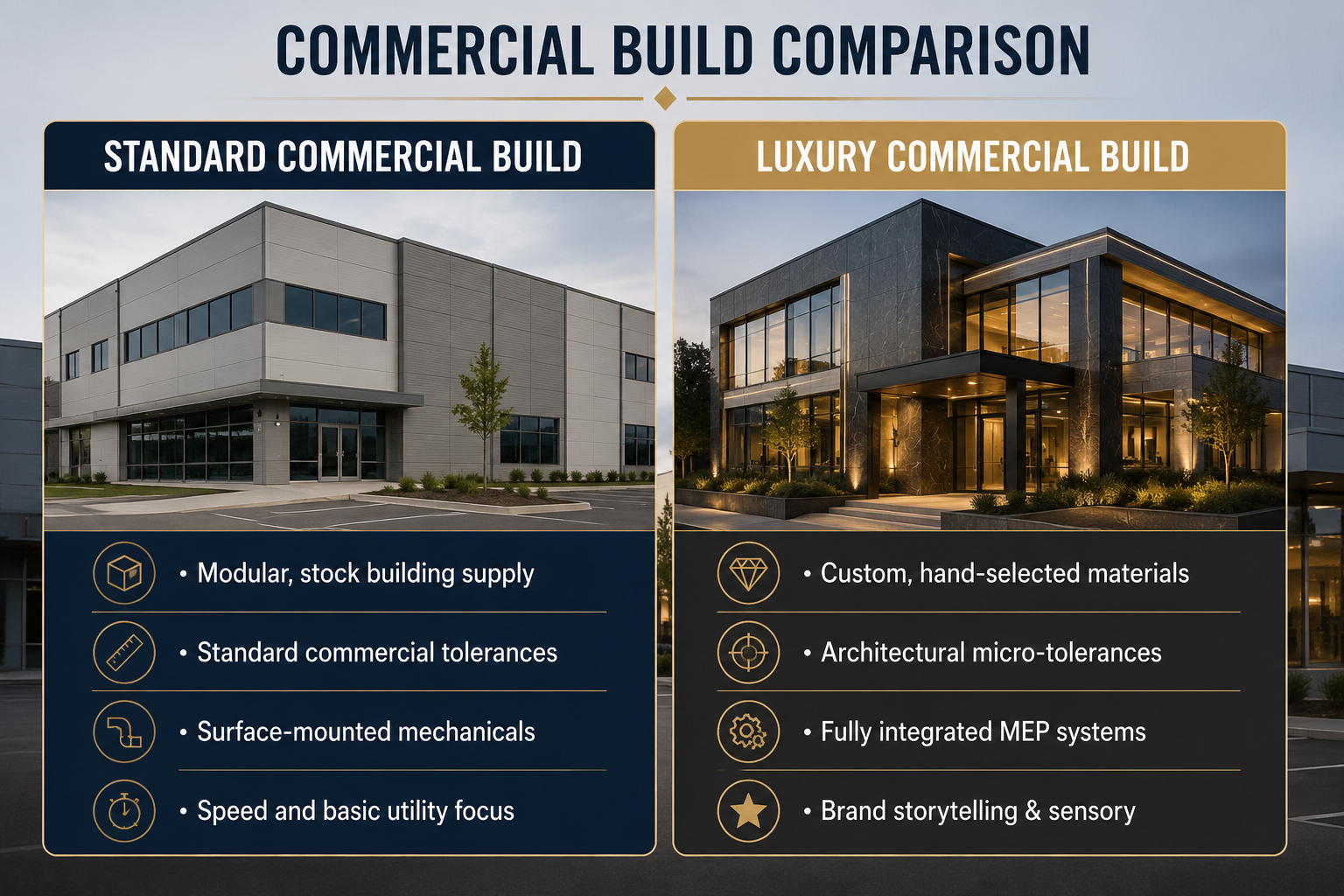
The most immediate distinction between standard and luxury commercial builds lies in the provenance, durability, and specification of raw materials.
Standard commercial construction relies heavily on prefabricated, off-the-shelf building components. Finishes are chosen primarily from manufacturer stock catalogs based on initial unit cost, ease of replacement, and basic fire or wear ratings. Common selections include standard acoustic ceiling tiles, vinyl composition tile (VCT) flooring, hollow-core interior doors, and aluminum storefront glazing systems. While functional, these materials rarely offer tactile warmth, unique character, or generational longevity.
Luxury commercial projects view materials through the dual lens of sensory performance and architectural legacy. Every finish is specified to convey permanence, authenticity, and refined aesthetics.
Incorporating these elevated elements aligns with timeless design principles over fleeting trends, ensuring that a commercial property maintains its prestige and appeal even as design styles evolve.
The difference between a standard finish and a luxury finish comes down to fractions of an inch. In standard commercial construction, building codes and general trade guidelines allow for standard tolerances. Wall reveals, baseboard gaps, and drywall seams are designed to be covered by thick trim, surface-mounted cover plates, or caulking.
Luxury commercial construction operates under architectural micro-tolerances where traditional trim is often intentionally eliminated in favor of minimalist, modern precision.
Achieving zero-reveal shadow lines or perfectly flush stone-to-wood floor transitions requires extraordinary substrate preparation. The framing, subflooring, and wall assemblies must be plumb, level, and square to microscopic standards before any finish contractor ever sets foot on site.
You cannot achieve luxury results with assembly-line labor methods. Standard commercial construction relies on high-velocity production crews focused on rapid installation metrics: square feet of drywall hung per hour or linear feet of carpet laid per shift.
Luxury commercial building requires master craftspeople, custom cabinetmakers, heritage masons, and specialized metal fabricators who treat commercial spaces with the same delicate care as a custom luxury estate.
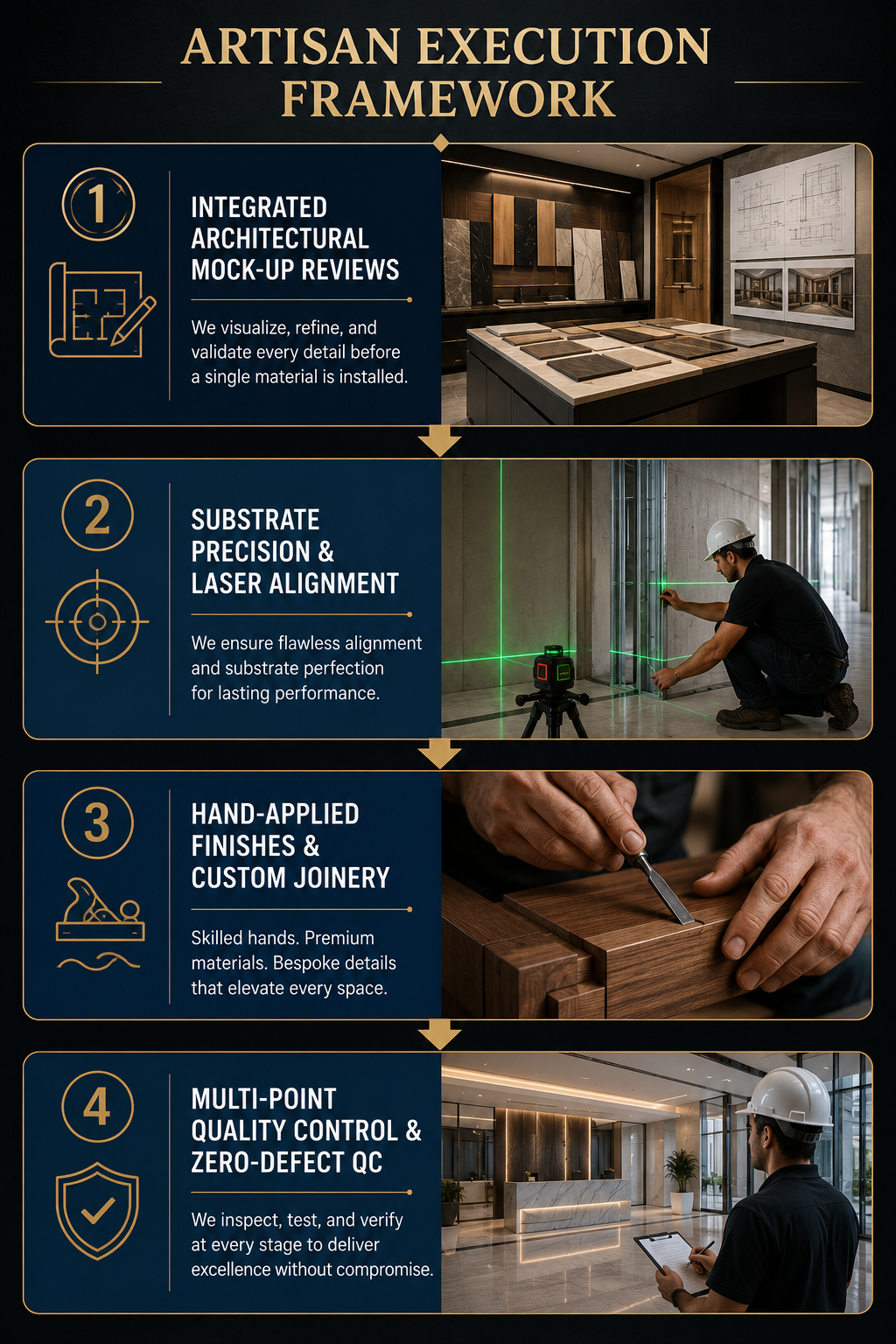
Consider the execution required for landmark commercial projects. Spaces such as artisan commercial environments like The Barn at Blackberry Farm demonstrate how timber joinery, custom stone masonry, and bespoke millwork can transform a commercial gathering place into a legendary work of art.
Executing work at this level requires an unwavering commitment from the builder. Operating with clear commitment to quality standards and core values ensures that trade superintendents prioritize structural integrity and aesthetic perfection above shortcuts or hasty installation practices.
A standard commercial building focuses primarily on visual aesthetics and basic thermal comfort. A luxury commercial environment engages all human senses, with particular emphasis on sound control, air purity, and atmospheric lighting.
Nothing destroys a luxury perception faster than hollow wall echoes, clattering footsteps, or overheard conversations from adjacent rooms. Standard commercial builds often use basic single-stud drywall walls with fiberglass batt insulation, yielding mediocre sound transmission ratings.
Luxury builds utilize advanced acoustic isolation strategies:
In standard commercial builds, mechanical equipment is often loud and visually intrusive, featuring exposed rooftop units, visible ductwork, and noisy wall thermostats.
In luxury builds, Mechanical, Electrical, and Plumbing (MEP) engineering is designed to be invisible and silent:
Because luxury commercial spaces incorporate highly technical custom elements, they cannot be successfully executed using traditional, adversarial bidding models where the lowest bid gets the contract regardless of skill.
Executing a luxury commercial project demands a collaborative preconstruction process involving the owner, architect, general contractor, and specialized trade specialists.
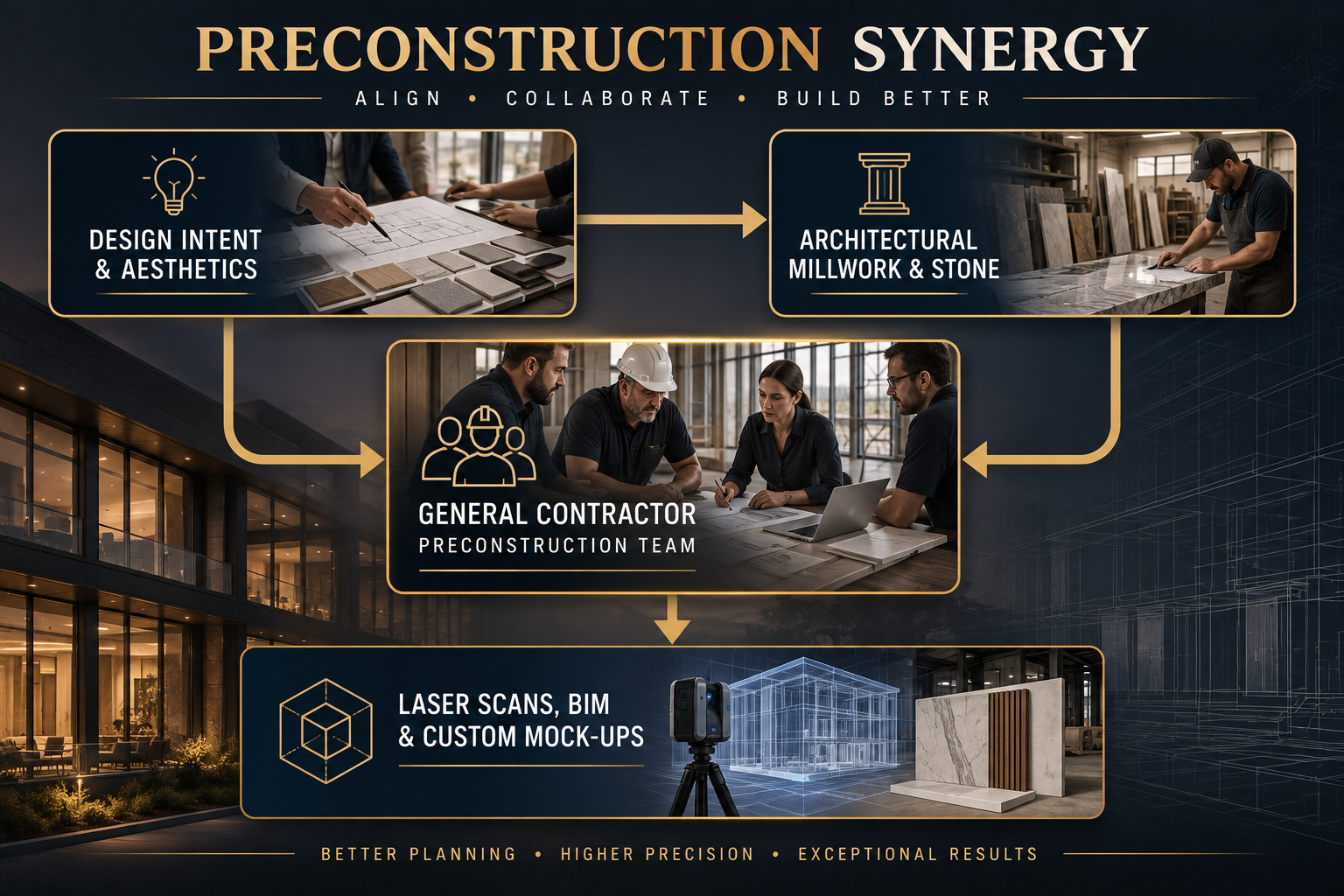
During preconstruction, the general contractor conducts comprehensive Building Information Modeling (BIM) clash detection, material lead-time tracking, and full-scale physical mock-up reviews.
For example, constructing an intricate custom glass wall or a floating cantilevered staircase requires building a 1:1 scale jobsite mock-up first. This allows the team to test lighting angles, structural deflection, and material joinery before installing the final components.
Achieving this level of coordination requires a curated network of skilled subcontractors and trade specialists who possess the specialized tooling, master certifications, and patience required for luxury construction.
While luxury commercial construction requires a higher initial capital investment per square foot, it provides distinct long-term financial and operational advantages over standard commercial builds.
For corporate offices, high-end commercial spaces serve as a powerful recruitment tool for top-tier executive talent. For hospitality, dining, and retail brands, exceptional architecture translates directly into higher dwell time, increased customer spend, and elevated brand prestige.
Standard commercial materials often suffer from short replacement cycles. Low-cost carpeting, thin laminate doors, and economy paint finishes show wear within three to five years of heavy foot traffic.
Luxury building materials—such as solid hardwoods, high-density natural stone, architectural metals, and commercial-grade lime plaster—develop an attractive patina with age rather than wearing out. This drastically reduces ongoing maintenance budgets and delays expensive capital renovation cycles.
From boutique medical spas and financial institutions to flagship retail stores and luxury event spaces, the principles of high-end commercial building apply across a wide variety of industries. Reviewing a diverse portfolio of commercial construction projects highlights how custom material selection and precision craftsmanship enhance commercial property values across diverse business sectors.
Building a luxury commercial project requires a general contractor who understands that a commercial space is more than a shelter for business operations. It is a physical embodiment of your brand's vision, standards, and commitment to excellence.
Executing these spaces demands deep regional knowledge, established supplier relationships, and a proven history of managing complex architectural details. Whether developing a new signature property or undertaking a major luxury renovation, working with experienced builders who specialize in commercial construction services across Knoxville, TN and the surrounding region ensures your vision is delivered without compromise.
By prioritizing material quality, micro-tolerance finish standards, silent infrastructure, and master craftsmanship from the earliest design phase, your commercial build will stand out as a benchmark of quality for decades to come.
If you are planning a commercial development that demands extraordinary attention to detail, uncompromising material quality, and expert preconstruction guidance, partner with a builder who shares your high standards. Contact our experienced commercial builders today to begin planning your next project.

